.gif)





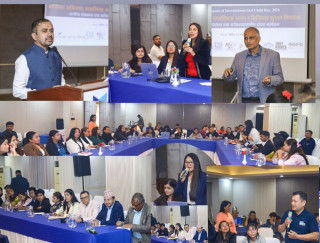





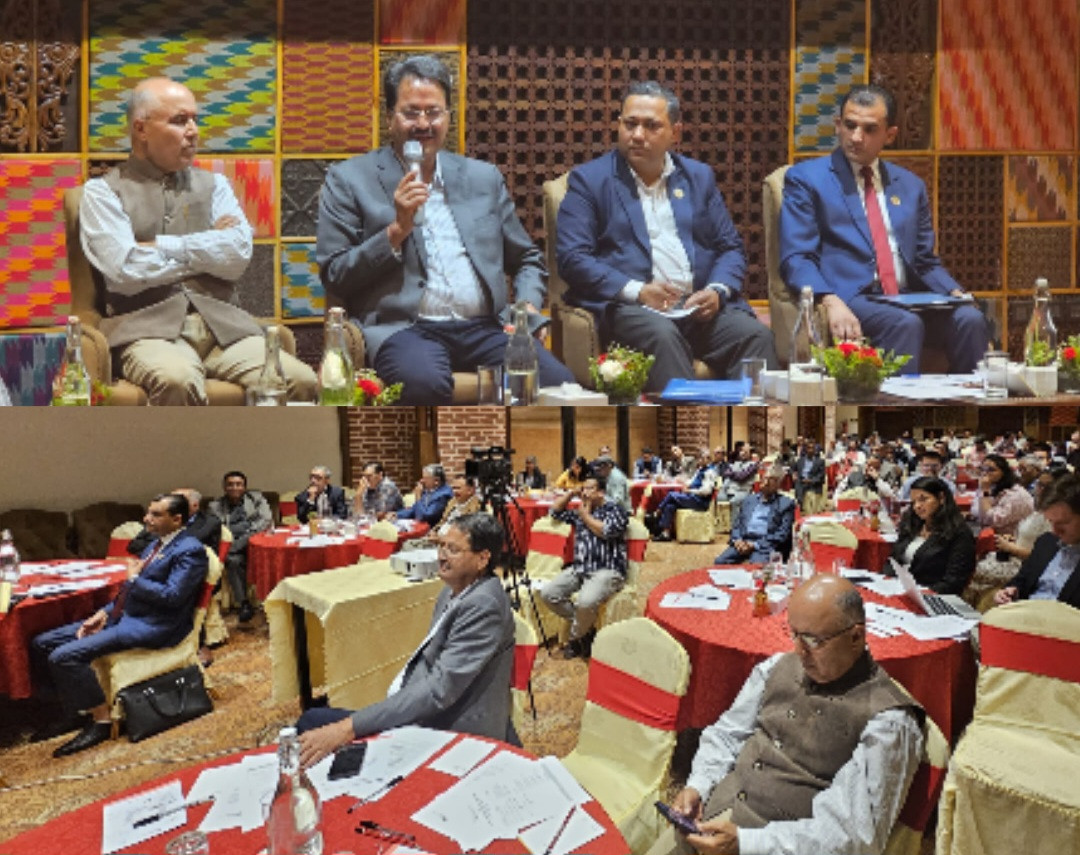
Kathmandu : The Centre for Social Innovation and Foreign Policy (CESIF) organized a National Seminar on “Strengthening Nepal’s Diplomatic Negotiations.” The seminar aimed to disseminate key findings of CESIF’s new research on Nepal’s Negotiations with China and discuss practical and strategic approaches to enhance Nepal’s diplomatic capacity in a complex geopolitical landscape.
 x 450 (H) Global Pana.jpeg)


The seminar began with welcoming remarks by CESIF’s Executive Chairperson, Amb. Vijay Kant Karna, who also set the context for the speech, presentation, and discussions to follow. Emphasizing the significance of the event, he stated, “This seminar aims to be a platform for strategic reflection, critical analysis, and the formulation of actionable insights to contribute to shaping Nepal's diplomatic future.” He further remarked that in the current global environment of shifting power dynamics, it is crucial for Nepal to “navigate this complex landscape with skill and foresight.” Highlighting China’s growing strategic interests in Nepal, he underscored the importance of building strong, capable negotiation teams that can safeguard Nepal’s long-term interests.
Following the welcome speech, Amb. Madhu Raman Acharya, Former Foreign Secretary of Nepal, delivered opening remarks to set the agenda for the seminar. Reflecting on Nepal’s long history of diplomatic engagements, from the 1816 Sugauli Treaty to contemporary negotiations with major powers, he emphasized the evolving nature of diplomacy. “Diplomacy is the art of negotiation. It is give and take in all negotiations,” he said, quoting the late Yadunath Khanal.
Amb. Acharya observed that while Nepal’s earlier negotiations were centered on political security, contemporary engagements have increasingly moved into the economic domain—such as trade, transit, and investment. He pointed out that “Bilateral negotiations are no longer bilateral in the true sense; they are influenced by geopolitical currents. Whether Nepal treats its geopolitical location as a leverage or a liability is a strategic choice.” He also critiqued Nepal’s internal approach to negotiations, citing institutional bypassing, limited preparedness, and a shrinking role for diplomats and technocrats. Highlighting China’s layered negotiation strategy that combines public diplomacy with high-level political deals, he warned, “Entering negotiations without understanding big powers’ strategic interests risks walking into a trap. Nepal must reiterate that no big power should use another to serve its own interests in deals involving Nepal.”
After the speech, CESIF’s Research Director Mr. Ajaya Bhadra Khanal presented key findings from CESIF’s latest research, highlighting how corruption, debt sustainability, and poor project viability continue to challenge Nepal’s negotiations with China. He pointed out that power asymmetries are particularly visible during high-level visits, and that party-to-party diplomacy has often overridden institutional processes—especially in politically sensitive deals like the Belt and Road Initiative.
Mr. Khanal emphasized that interest-based, strategically autonomous negotiations—led by foreign policy institutions, not politicians—are crucial. “We must better understand China’s objectives, define our own bottom lines, and build trust within our institutions,” he said, warning that projects should be properly assessed for viability.
CESIF brought together experts and practitioners to discuss various dimensions of Nepal’s diplomatic negotiations in two different panels. The first panel included speakers Dr. Govinda Raj Pokharel, Former Vice Chairperson of the National Planning Commission of Nepal; Mr. Shanker Das Bairagi, Former Chief Secretary and Former National Security Advisor; Mr. Madhu Kumar Marasini, Former Finance Secretary; and Amb. Sarmila Parajuli Dhakal, Former Ambassador of Nepal to Spain. The panel was moderated by Mr. Ajaya Bhadra Khanal, and the discussion centered on “Strengthening Nepal’s Negotiation Capacity.”
Panelists underscored the importance of strategic awareness, institutional clarity, and national consensus. Mr. Bairagi emphasized that Nepal must shed its inferiority complex, understand the strategic interests of negotiating partners, and resist undue geopolitical pressure, noting, “We must achieve a coordinated national consensus on our interests before sitting at the negotiation table.” Mr. Marasini highlighted that long-term strategic considerations like sovereignty and territorial integrity must be prioritized, and called for evidence-based negotiation practices. Dr. Pokharel stressed the need for greater preparation and warned of Nepal’s recent diplomatic concessions, such as adopting terms like “Xizang” and endorsing sensitive Chinese positions like that on Taiwan in joint statements. Amb. Parajuli Dhakal urged politicians to rise above party manifestos, focus on national interests, and explore under-utilized foreign partnerships, especially in labor diplomacy and emerging tech sectors.
The second panel hosted Nepal’s senior political leaders to discuss “Geopolitics and Bilateral Negotiations” and was moderated by journalist Binu Subedi. The panel included Hon. Surendra Pandey, Former Minister of Finance; Hon. NP Saud, Former Minister of Foreign Affairs; Hon. Shisir Khanal, Head of the International Relations Department of Rastriya Swatantra Party; Hon. Madhav Sapkota, Member of the House of Representatives; and Mr. Rameshore Khanal, Former Finance Secretary.
Panelists reflected on the need for coherence in foreign policy and for institutional checks and accountability. Mr. Rameshore Khanal emphasized that political boundaries must not restrict economic cooperation and Nepal should prioritize off-shoring. Hon. NP Saud shared insights from his official visits, observing that Nepal often signs agreements too hastily to showcase diplomatic success. He stressed the need for inter-agency collaboration to formulate well-rounded strategies based on rigorous analysis. He added, “Foreign policy must be rooted in national consensus. It should not be reduced to a tool for domestic consumption. Only then, we will be able to achieve better negotiation.” Hon. Shisir Khanal critiqued the lack of communication between the government and parliamentary committees, noting that lawmakers are often informed of foreign policy matters through the media rather than formal channels. Hon. Madhav Sapkota argued for deeper research-based policymaking and acknowledged the informal value of party-to-party relations in laying the groundwork for stronger state-level diplomacy.
Ms. Shambhavi Shiwakoti, Researcher at CESIF, wrapped up the event by summarizing the key issues raised and the consensus reached on the seminar.
Around hundred participants including policymakers, politicians, national and international experts, analysts, academics, diplomats, bureaucrats, and journalists attended the event.