
.gif)















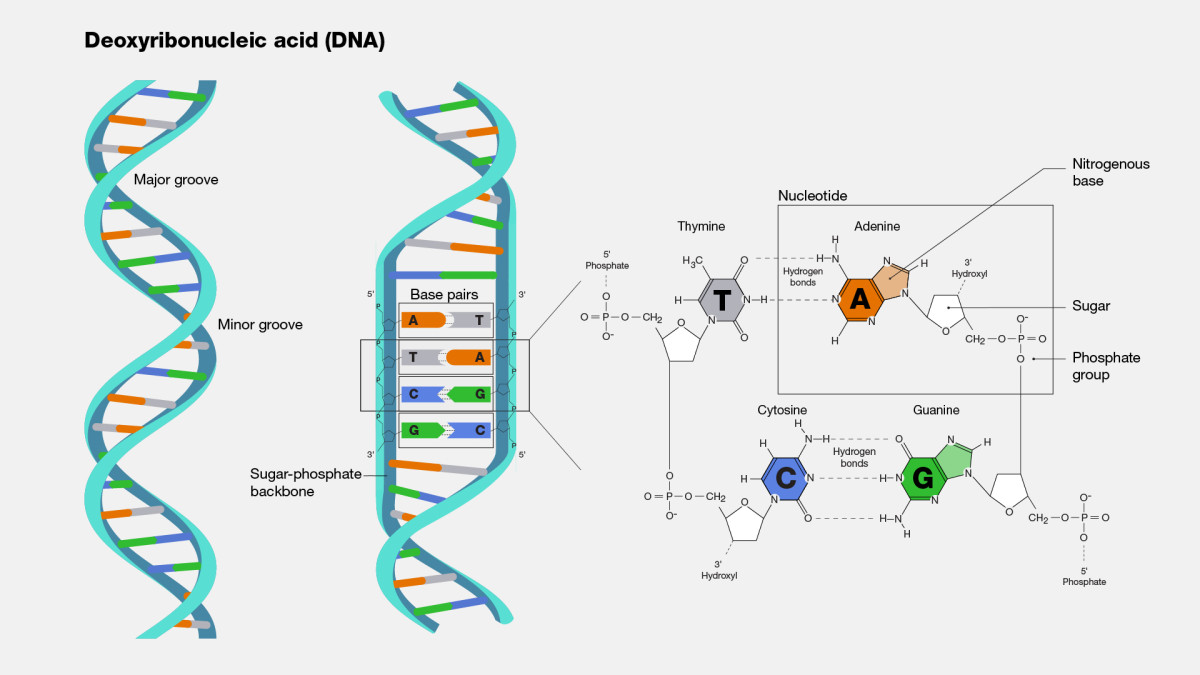
DNA, or deoxyribonucleic acid, is the molecule that carries the genetic instructions for all living organisms. It is often referred to as the blueprint of life because it contains the information needed for growth, development, functioning, and reproduction. In this article, we’ll explore what DNA is, how it works, and its significance in modern science.
 x 450 (H) Global Pana.jpeg)


What is DNA?
DNA is made up of two strands that form a double helix. Each strand consists of units called nucleotides, which include a sugar, a phosphate group, and a nitrogenous base—adenine (A), thymine (T), cytosine (C), and guanine (G). These bases pair specifically: A with T and C with G, holding the two strands together through hydrogen bonds. This sequence forms the genetic code that dictates the structure and function of proteins in our bodies.
The Role of DNA
1. Genetic Information Storage: DNA contains the instructions for making proteins, which are essential for cell function. The sequence of nucleotides determines the specific order of amino acids in proteins, thus controlling their shape and function.
2. Replication: Before a cell divides, it must replicate its DNA to pass on its genetic information. The process involves unwinding the DNA double helix and synthesizing new complementary strands, ensuring that genetic information is preserved.
3. Mutation and Variation: DNA can undergo mutations, which can result from errors in replication, environmental factors, or natural changes over time. While most mutations are harmless, some can lead to diseases or new traits. Mutations in germline cells can be inherited by offspring, contributing to genetic diversity.
DNA in Modern Science
1. Genomics and Biotechnology: Advances in DNA sequencing have allowed scientists to map entire genomes. The Human Genome Project was a landmark achievement, providing the first complete sequence of the human genome. Techniques like CRISPR-Cas9 enable precise editing of DNA, allowing for new treatments and genetic modifications.
2. Forensic Science: DNA profiling is used in forensic science to identify individuals by comparing genetic material from crime scenes to suspects. This method has become a critical tool in criminal investigations worldwide.
3. Agriculture and Conservation: DNA technology is used in agriculture to develop crops with desirable traits, such as resistance to diseases. In conservation, it helps in tracking endangered species and understanding genetic diversity.
Future of DNA
Research DNA research is continuously evolving, with advances such as single-cell sequencing, long-read sequencing technologies, and epigenetics providing deeper insights into biological processes and complex diseases. These developments promise to unlock new frontiers in medicine, agriculture, and environmental sustainability.
Understanding DNA is crucial for improving human health, advancing scientific knowledge, and addressing global challenges. As technology progresses, the ability to manipulate and understand DNA will become increasingly powerful, driving further discoveries and innovations.